

Rigid Flex Printed Circuit Boards in Aerospace
As the demand for PCB technology in aerospace applications grows, manufacturers are seeking ways to reduce product size and weight without sacrificing functionality. This has led to the rise of rigid flex PCBs, which combine traditional rigid boards with flexible, dynamic circuitry. This hybrid technology offers a number of benefits, including reduced packaging size and weight, lower manufacturing costs, and improved durability.
PCB technology continues to advance, allowing engineers to design smaller, more compact devices that deliver enhanced performance and functionality. These innovations are critical in the aerospace industry, where miniaturization is key to reducing the overall weight of aircraft and other airborne systems. rigid-flex printed circuit board have become a critical part of this trend, offering the strength and durability required for the rigorous environments found in many aircraft and other aerospace applications.
Rigid flex PCBs are typically made by laminating together a series of rigid and flex layers, with the rigid parts carrying components and the flex layers serving as interconnection paths. This allows designers to utilize the best of both worlds, combining the thermal stability and mechanical reliability of rigid PCBs with the flexibility and adaptability of flex circuitry.
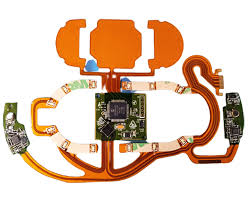
The Role of Rigid Flex Printed Circuit Boards in Aerospace
This combination also increases component density, enabling designers to pack in more high-end technology in less space, resulting in reduced packaging size and weight. Rigid flex PCBs can also be designed to withstand a higher level of vibration than traditional rigid PCBs, eliminating the risks of material fatigue or failure and reducing the risk of malfunction and disruption during operations.
Another benefit of rigid flex PCBs is their ability to reduce the amount of solder joints needed, which in turn cuts down on assembly time and cost. These boards are also more durable, able to withstand harsh conditions and resist warping in the presence of moisture or extreme temperatures. This durability also helps to reduce the need for maintenance and repairs.
Rigid flex PCBs can be designed with a variety of features to support various aerospace applications, including HASS (High-Altitude, High-Temperature, and Shock) and EMI/EMC (Electromagnetic Compatibility) requirements. The specialized materials used for rigid-flex circuitry offer greater resistance to bending, impact, and vibration, making them an ideal choice for applications in aircraft and other airborne vehicles.
One of the most significant advantages of rigid-flex PCBs is their ability to eliminate the need for bulky and cumbersome interconnects, connectors, and wiring harnesses typically associated with traditional rigid PCBs. By integrating flexible sections directly into the board design, engineers can achieve a more compact and lightweight final product, ideal for applications where space and weight are critical factors.
The versatility of rigid flex circuits has also made them popular in a wide range of consumer electronics. For example, laptop and desktop computers, solid-state drives (SSDs), flat-screen TVs and monitors, children’s toys, and a host of other electronic gadgets frequently use rigid-flex circuitry. In addition, the more sophisticated and advanced devices, such as GPS units, smartphones, tablets, cameras, and wearables, are often built with flex circuitry.


