

flex circuit simplify product design
A flex circuit is a printed circuit board that contains copper conductors laminated with layers of polyester insulators, typically polyimide. Its design allows it to fold, bend and twist many times without damaging the copper traces or the polyimide insulators. These flex circuits are used in a variety of electronics such as calculators, mobile phones, cameras, printers, LCD TV’s etc. They are also used in medical applications such as heart monitors, pace makers and hearing aids. Flex and rigid-flex circuits are also being used in military, aerospace and automotive devices.
There are two major factors that affect a flex circuit’s thickness. One is current capacity and the other is strength. For example, areas of a flex circuit that receive high amounts of current need to be thicker than other thinner regions to maintain a stable structure. Similarly, the terminal point of the circuit should be made thicker to avoid short circuiting during operation. The thickness of a flex circuit can be increased by adding stiffeners which are small pieces of rigid material that are added to selected locations on the PCB. This option may add to the cost of a flex circuit.
Another way to increase the stability of a flex circuit is by adding adhesive tape to certain surfaces. This can help prevent damage during shipping or handling. Another option is to add a metal shield which is an electromagnetic interference (EMI) barrier that can block radiation from entering the circuit. This type of shielding is often needed when working with electronic equipment in harsh environments such as industrial environments or aerospace/military operations.
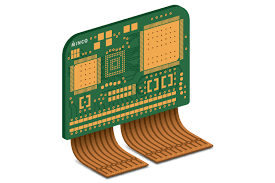
How does a flex circuit simplify product design?
The final factor that increases the reliability of a flex circuit is its ability to dissipate heat. The polyimide insulation that is used in a flex circuit can withstand higher temperatures than a hard-board or wire harness. Additionally, the thin copper traces and the polyimide allow a greater surface area for heat to be transferred away from the circuits.
As a result of these advantages, flex and rigid-flex circuits simplify product design by eliminating or reducing the number of point-to-point wire connections that would otherwise be required with a wire harness. This can reduce assembly costs by eliminating the need for wires and reducing the likelihood of human error since a circuit artwork controls all connections.
A flex circuit is also more durable than a hard-board or wire harness and can resist environmental conditions such as temperature, humidity, oils, acids, radiation, UV exposure and vibration. As a result, a flex circuit can be used in a wide range of different products without worrying about its ability to perform. This is especially important in the case of medical and military devices where failure due to environmental conditions can be life-threatening or cause a costly production delay. For these reasons, a flex circuit is becoming more and more popular in the high-density electronics industry. In addition, a flex or rigid-flex circuit can provide significant cost savings by replacing bulky wire harnesses in a wide variety of applications.

