pcb manufacturing assembly
PCB (Printed Circuit Board) manufacturing and assembly are fundamental processes in the electronics industry, crucial for the production of various devices, from smartphones to medical equipment. However, the question of whether PCBs can be bent or twisted raises important considerations regarding their structural integrity, functionality, and applications.
To address this query comprehensively, let’s delve into the intricacies of pcb manufacturing assembly. PCBs typically consist of multiple layers of conductive material sandwiched between insulating layers, with intricate patterns of circuits etched onto them. These circuits facilitate the flow of electrical signals between components, enabling the device to perform its intended functions.
One crucial aspect of PCB fabrication is the choice of materials. Traditional FR-4 (Fire Retardant 4) epoxy-based substrates are widely used due to their excellent electrical properties and mechanical strength. However, flexibility is not one of their strong suits. FR-4 PCBs are rigid, making them unsuitable for applications where bending or twisting is required.
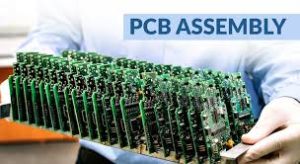
Can pcb manufacturing assembly be bent or twisted?
Nevertheless, advancements in materials science have led to the development of flexible PCBs, also known as flex PCBs or FPCs. These boards employ flexible substrates such as polyimide or polyester, which can withstand bending and twisting without compromising their functionality. Flex PCBs offer numerous advantages in applications where space constraints or complex form factors are present, such as in wearable devices, automotive electronics, and medical implants.
The manufacturing process for flex PCBs differs from that of rigid PCBs. Instead of relying solely on traditional subtractive methods like etching, flex PCB fabrication often involves additive processes such as printing or deposition. This flexibility in manufacturing techniques enables the creation of intricate designs tailored to specific bending or twisting requirements.
However, it’s essential to note that while flex PCBs are inherently more bendable and twistable than rigid PCBs, they still have their limits. Excessive bending or twisting can cause mechanical stress on the conductive traces, leading to cracks or delamination of the substrate. Therefore, designers must carefully consider the intended usage conditions and design the flex PCB accordingly, incorporating features like curved traces, tear-resistant materials, and proper reinforcement to mitigate mechanical strain.
Moreover, the assembly process for flex PCBs may differ from that of rigid PCBs due to their flexible nature. Specialized equipment and techniques may be required to ensure proper handling and placement of components on the flexible substrate. Additionally, soldering techniques must be adapted to accommodate the flexibility of the board and prevent damage during assembly.
In summary, while traditional rigid PCBs are not suitable for bending or twisting, flexible PCBs offer a viable solution for applications requiring such characteristics. Flex PCBs leverage flexible substrates and specialized manufacturing techniques to withstand bending and twisting while maintaining electrical functionality. However, designers and manufacturers must consider the mechanical limitations of flex PCBs and employ appropriate design and assembly practices to ensure reliability and longevity in real-world applications.