

flexible printed circuit manufacturers
Flexible Printed Circuits (FPCs) are an integral part of modern electronics, powering everything from smartphones to medical devices and automotive systems. Due to their complex nature and the critical applications they serve, ensuring the quality of FPCs is paramount. Flexible circuits must be precise, durable, and free of defects, and to meet these high standards, manufacturers employ a range of rigorous quality control (QC) methods throughout the production process. These QC measures help ensure that the circuits are reliable and perform as expected in their intended applications.
One of the most important quality control methods used by flexible printed circuit manufacturers is visual inspection. This is typically the first step in the QC process, where operators visually inspect the circuits for defects such as misalignments, incorrect or inconsistent trace widths, and missing or damaged components. Visual inspection is especially crucial in detecting issues like soldering defects or poor adhesive bonding, which can significantly impact the performance and reliability of the FPC. This inspection is often aided by magnification tools or automated optical inspection (AOI) systems, which use high-resolution cameras to scan the circuit boards and detect even the smallest imperfections.
Another key quality control method is electrical testing. Electrical testing is used to check the functionality of the conductive traces on the FPC, ensuring that they form complete electrical pathways without any breaks or shorts. One of the most common techniques used in electrical testing is the “flying probe test,” where test probes make contact with the circuit’s pads to verify connectivity. This method is particularly useful for low-volume production runs or prototype designs. For high-volume manufacturing, manufacturers may use automated in-circuit testing (ICT) or bed-of-nails testing, where a custom test fixture with multiple test points is used to test all the electrical connections on the FPC simultaneously. These tests ensure that the FPC’s electrical functionality meets the required specifications.
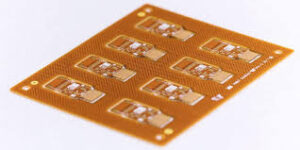
What quality control methods do flexible printed circuit manufacturers use?
Thermal cycling and thermal stress testing are also vital quality control methods for FPCs, particularly because they are often used in environments subject to temperature extremes. These tests simulate the effects of temperature fluctuations on the FPC to ensure that the circuit will perform reliably over time. During thermal cycling, FPCs are exposed to repeated cycles of high and low temperatures to simulate the stress they might undergo in real-world conditions. This testing helps manufacturers identify potential issues such as trace delamination, cracks, or substrate deformation that could occur due to thermal expansion or contraction.
Another critical quality control process is the inspection of the soldering and bonding processes. The integrity of solder joints is vital to the overall performance of the FPC, as weak or incomplete solder joints can result in electrical failures. Soldering defects such as cold solder joints, bridging, or excessive soldering can be detected using automated optical inspection (AOI) systems or X-ray inspection techniques. X-ray inspection is particularly useful for detecting hidden soldering issues, such as poor joints under surface-mounted components or multi-layer FPCs, where visual inspection may not be sufficient.
In addition to these traditional methods, flexible printed circuit manufacturers also perform stringent environmental testing, which involves exposing the FPCs to various harsh conditions to assess their durability. This can include tests for moisture resistance, humidity exposure, and corrosion resistance, as FPCs are often used in environments where they are exposed to moisture, chemicals, or other corrosive elements. Environmental tests ensure that the flexible circuits maintain their performance even under challenging conditions.


